A Beginner's Guide to British Folklore Creatures: Brownies, Boggarts and Beyond
Ask ten people in ten different counties to describe a boggart and you will get ten answers. One will swear it lives in a damp cellar in Lancashire, another will insist it haunts a field gate in Yorkshire, a third will tell you about a creature with a dog's head and a child's hands. That is folklore for you: no canon, no rulebook, no central office. Just stories that have been told in kitchens, by fires, on the way home from the pub, and adjusted slightly each time.
Here is a beginner's map of the main creatures, what they want, and how to put them to work in a story of your own.
What counts as a British folklore creature?
Broadly, a supernatural being that comes from oral tradition rather than from a single author. They tend to belong to a place — a house, a mill, a river bend, a stretch of moor — and they tend to operate on rules. Break the rule and something happens. That is the engine of nearly every good folk tale.
Four rough groups cover most of them: household spirits who attach themselves to families, shape-shifters, water beings, and the spectral animals and lights of the open landscape. The same creature often turns up under different names twenty miles apart. A hob, a bwbach and a fenodyree are all doing roughly the same job.
Brownies: the helpful ones
A brownie is a small, shaggy, quiet creature who moves into a house — usually an old farmhouse or a mill — and does the work overnight. He threshes the corn, churns the butter, tidies the hearth. In return he expects a bowl of cream, or bread and honey, left out on the flagstones.
The rules matter more than the appearance:
- Do not watch him work. Curiosity breaks the arrangement.
- Do not thank him out loud. Thanks, oddly, is an insult.
- Do not pay him wages. Wages turn a gift into a contract, and he will leave.
- Never give him clothes. A brownie handed a shirt and hood will vanish, sometimes singing that he has no need to toil for the family any longer.
Northern England knows him as a hob. He is a useful character because he is essentially a bargain with a temperament attached to it. The moment your human character gets greedy, careless or rude, the story writes itself.
Boggarts: the ones you would rather not have
The boggart is the brownie's bad-tempered cousin. Same household, same invisibility, entirely different attitude. Milk sours, tools go missing, candles snuff out, a horse turns lame in the night, something bangs about in the attic at three in the morning. Some boggarts shift shape; a few are said to be bound to a particular family for generations, following the blood rather than the building.
Getting rid of one is famously difficult. The two classic solutions are to set the boggart an impossible task — making a rope out of sand, carrying water in a sieve — or to move house. The second rarely works. A well-known version of the story ends with the family's furniture on a cart and a voice from among the boxes remarking that it has lived with them a long while and has no intention of stopping now.
The word itself has cousins everywhere: boggle, bogey, bugbear, and the Welsh bwgan. It is worth noting how often the boggart is described as a brownie that was cheated, thanked or laughed at once too often. Folklore rarely invents a monster from nothing. It usually promotes one.
Water, woods and wild places
Water creatures are the most dangerous in the tradition. The Scottish kelpie appears as a handsome horse grazing by a loch; anyone who mounts it finds their hands stuck fast and is carried under. The each-uisge, its saltwater relative, is worse. On the coasts of Orkney, Shetland and the Hebrides you find selkies — seal folk who shed their skins and walk on land. The old stories are full of a man hiding a skin to keep a selkie wife, and of what happens when she finds it.
Inland, the water hag does the warning work. Jenny Greenteeth, Peg Powler and the grindylow were told to children in Cheshire, Lancashire, Yorkshire and along the Tees to keep them away from ponds and riverbanks. They were not subtle stories, and that was the point.
Then there is the landscape after dark. Will-o'-the-wisp, also called jack-o'-lantern, is a cold flame hovering over boggy ground, and following it is a terrible idea. Black dogs patrol the edges of the country: Black Shuck in East Anglia, the Barghest in Yorkshire, the Gwyllgi in Wales, the Yeth Hound in Devon. Some are omens. A few are worse than omens.
The short field guide
- Brownie — helpful household spirit; works at night; ruined by thanks, wages or a new shirt.
- Hob — the northern brownie; loyal but prickly.
- Boggart — noisy, spiteful, hard to evict; often a brownie turned sour.
- Piskie — small, mischievous south-western fairy; expert at losing travellers.
- Spriggan — Cornish guardian of barrows and standing stones; strong, ugly, unfriendly to diggers.
- Knocker — Cornish mine spirit; knocks as a warning and expects a corner of your pasty.
- Kelpie — Scottish water horse; takes its rider into the loch.
- Selkie — seal person; a hidden skin keeps them ashore.
- Black Shuck — East Anglian dog with eyes like saucers; an omen, mostly.
- Will-o'-the-wisp — a light over marsh ground; pretty, and a trap.
Where the stories come from
Most of them came from ordinary life in a working landscape. Will-o'-the-wisp maps neatly onto marsh gas drifting over wet ground. Knockers make sense in mines where rock shifts and water moves, and where a warning knock could save a life. Black dogs cluster around churchyards, crossroads and storms. The stories were not explanations exactly, but they were ways of paying attention.
Written versions are snapshots, not originals. Robert Kirk set down Highland belief in The Secret Commonwealth in 1691; Victorian and Edwardian collectors gathered thousands of tales, often tidying them up; Katharine Briggs's dictionaries in the twentieth century pulled much of it together. Every one of those books is a single telling of a story that had already changed a hundred times.
Using folklore creatures in your own stories
Pick the creature that solves your problem, then make it consistent.
- Give it three rules it cannot break. Cream on the step, no thanks, never clothes. Rules create tension because your characters will eventually break one.
- Ground it in a real place. Name the lane, the reservoir, the bus shelter at the end of the terrace. Folklore works street by street, not county by county.
- Decide what it wants. Silence, cream, respect, soil, a name, a child. A creature with a clear want is easy to write and impossible to forget.
- Keep the language plain. "It was standing in the yard at half two in the morning" beats three sentences of atmosphere.
- Make the human pay. The old tales rarely let anyone off cheaply, and neither should you.
Finding your own local stories
Start close to home. Place names give away a great deal: Boggart Hole, Hob Lane, Puck Hill and their many variants usually point to a story that was once told about that exact spot. Local studies libraries, museum archives and old newspaper files are full of collected tales. So are grandparents.
When someone tells you one, write down the version you heard, along with where and when, and who told it. That is how the tradition has always worked. If you retell a story you were given by a living teller, say where it came from. If you build your own creature on the old rules, change enough to make it yours. Nobody owns a boggart. That is precisely why there are so many of them.
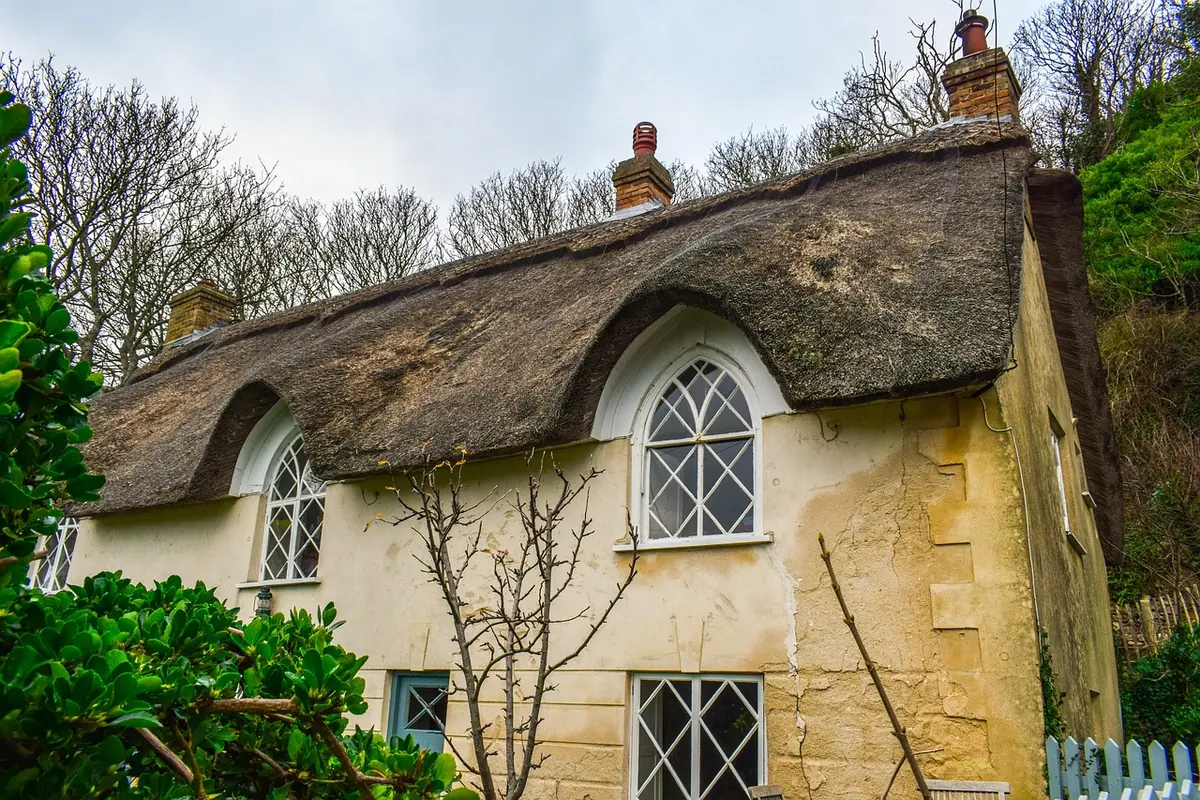
Photo: johnNaturePhotos / Pixabay